Wednesday, April 21, 2010

Friday start for Six Nations


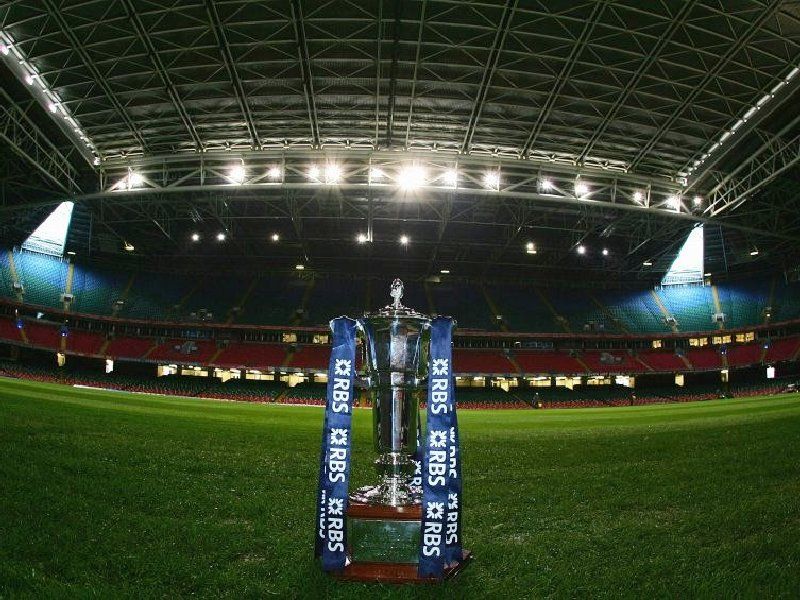
England and Wales will kick-off their 2011 RBS Six Nations Championship campaigns with a Friday night match in Cardiff.
The two rivals will kick-off next year's tournament at the Millennium Stadium on Friday February 4.
Two previous games have been played on Friday evening, with Wales losing 21-16 to France in Paris in 2009 and Les Bleus winning the fixture in Cardiff this year.
However this will be the first time that the championship has started on a Friday.
Defending champions France will kick-off their challenge on Saturday February 5 against Scotland, with a home game against Wales to round off their campaign on Saturday March 19.
England have three successive home games against Italy (February 12), France (February 26) and Scotland (March 13), before they finish up with a trip to Ireland.
Scotland host Wales and Ireland in rounds two and three and finish with another home game against Italy.
Wales visit Italy in round three and host Ireland two weeks later.
Six Nations Tickets are available online on GigSport.

Wednesday, April 14, 2010

Wales & England set for Friday Six Nations kick-off


Wales and England will kick off the 2011 Six Nations in the Championship's first Friday night curtain-raiser.
The arch rivals will clash at Cardiff's Millennium Stadium on 4 February for the landmark fixture.
Six Nations games were traditionally played on Saturdays then latterly Sunday but controversial Friday night fixtures were introduced in 2009.
France hosted Wales in the Six Nations' first Friday fixture last year before the reverse game in Cardiff this year.
The full fixture list for the 2011 tournament is due to be announced at midday on Wednesday.
The Six Nations' organisers will confirm Wales are to play in their third Friday night game in successive seasons.


Wales lost 21-16 in Paris in February 2009 before a 26-20 defeat at the Millennium Stadium as Six Nations chiefs hoped to capitalise on the tradition of Friday night rugby in France.
But the Friday night project will be a new experience - although they have played in Paris late on Saturday nights.
The Six Nations' Friday night initiative has sparked complaints from both fans and players who would rather play on traditional weekend days.
Rugby fans have bemoaned the inconvenience of internationals on work days, citing travelling to games in time for kick-off as the major difficulty.
And Wales captain Ryan Jones has also publicly voiced his displeasure on playing on Fridays.
But Six Nations chiefs are keen to continue the ongoing Friday night experiment due to bumper television viewing figures and other commercial rewards.

Thursday, March 25, 2010

TeleBest: the 2010 Six Nations dream team

15 - CLEMENT POITRENAUD (France): The Toulouse star (centre) is still remembered for his defensive howler that gifted Wasps 2004 Heineken Cup glory, but he proved a mesmeric attacking force during France's march to the Grand Slam.

The RBS 6 Nations Championship is done and dusted for another season. By common consent, it was a disappointing tournament that offered scarce entertainment and too many ordinary matches, with one team - Grand Slam champions France - head and shoulders above the rest.
Here, PA Sport's rugby union correspondent Andrew Baldock identifies those players who rose above the mediocrity.

Tuesday, February 2, 2010

Scotland v France Tickets Six Nations 2010

Scotland kick off their six nations campaign when they host France at Murrayfield on Sunday 7th February 2010 with the kick off at 3pm. Scotland finished 5th in the RBS Six Nations Championship in 2005 and will want to improve on that this year, France on the otherhand finished joint 2nd and will be looking to go one better this year and win the 6 Nations Championship for the first time since 2006.Buy Six Nations Tickets for Scotland v France via ticket exchange sites like GigSport. They both have cheap scotland v France Tickets available from around £30.

Monday, November 9, 2009

They are building for success, England yet to prove


Likely without ever intending it, the most damning analysis of England’s performance at Twickenham on Saturday came not from any analyst or expert or writer with finely poisoned quill, it came from Rocky Elsom, the Australia captain.
When asked to what extent he and his team mates had to battle to keep out England, how much hard work and backs-against-the-wall stuff was required to defend their tryline, to stop England from going for the jugular, Elsom said that his team had to work very hard in defence, but he added: “I didn’t feel we were really stretched.”
England may have been going for the jugular, but, as Elsom attested, the home team did not clap eyes on it all day. England are again building, waiting, preparing for greater things, yet appear to remain stuck in a perpetual state of waiting, building and preparation.
There is a Groundhog Day feeling to the start of these autumn series at Twickenham. England start averagely, they perform honestly, valiantly but undazzlingly and then deliver the reminder that that was just the start. That was pretty much the form on Saturday. And it has been pretty much the history of the England team, yes, ever since 2003.
If you plotted a progress curve from that date, it would be flat. There appeared to be an upward turn towards the end of last season’s RBS Six Nations Championship but that seems a blip rather than a foundation from which further improvement may be made. It is all very well to draw a line in the sand and say, “from here we go forward”, but England, for once, need to build momentum and keep it.
Martin Johnson, the team manager, said: “That is the first game this side has played together and we will be better for it for next week.” And quite right, they should improve for Argentina on Saturday.
Yet there seemed less patience in the approach to building and rebuilding from Robbie Deans, the Wallabies coach. “If you look at our experienceacross the board, our cap count is not that high, either,” he said. “But it doesn’t really matter. People don’t really care how many caps you have or how old you are, they expect you to perform.”
Given a choice of the two, who would not prefer the Australian way? On Saturday they threw in a new centre partnership and they delivered on Day 1. And Will Genia, the scrum half, is so fresh to this game that he was buzzing afterwards, not about having beaten England but because he had met Jonny Wilkinson. “I’ll go home and tell my family, ‘I played against Jonny Wilkinson and shook his hand,’ ” he said.
It would, though, be preposterous not to recognise the unusual circumstances here. England’s injured army is astonishing in number. Australia may have established now that Genia and those centres, Digby Ioane and Quade Cooper, are international class, but England likewise made three significant gains last season and of those, Delon Armitage and Riki Flutey are injured, and only Tom Croft remains.
Three finds in one season is a decent haul. And remember that a year ago when Flutey made his debut, he did not exactly look the part. Shane Geraghty hardly looked the part on Saturday but if, by the end of the Six Nations, he and two other new faces have proved their worth at this level, then the pool grows ever deeper.
However, the issue with England and the team’s development is not so much who they play but how. With the bountiful resources at England’s command, the ability to survive the present injury crisis and find enough quality to make the necessary replacements should not be a blessed relief but a fact of life.It should be taken for granted.
In the 67th minute on Saturday, Matt Banahan took up the ball for England over the halfway line and there followed more than a minute of possession for the home side that went left, right, left, right, left, from one side of the pitch to the other until the ball was knocked on by Ayoola Erinle.
The ground that England made in that time was minimal. They got nearly as far as the Wallabies’ 22 and by the time Erinle had dropped it, they were pretty much back where they started. The reason that, as Elsom said, Australia were not exactly stretched was because England were playing such a straightforward game.
England can amass all the talent they like, three new good ’uns a year, but until they find a way of asking questions of opposition defences, they will not stretch them, they will remain where they are: in a perpetual state of building, perpetually preparing to achieve, but never actually getting it completed.
Monday, August 10, 2009

Six Nations Championship: South Africa 28 New Zealand 19

South Africa held off a furious second-half rally from New Zealand to win their Tri-Nations opener in Bloemfontein.
The All Blacks recovered from a 17-3 deficit early in the second half to get within four points, but the Springboks sealed the deal when Jaque Fourie went over eight minutes from time to make it 25-16.
The All Blacks took the lead through Stephen Donald's early penalty, but South Africa came roaring back with 17 unanswered points.
Frans Steyn levelled the scores with a penalty, and South Africa should have led in the 11th minute when Ruan Pienaar struck the post with another penalty kick.
He would miss one more before finally making it 6-3 in the 16th minute.
It had been a tense, tight opening, marked by the odd scuffle, but the Springboks blew it open in the 24th minute when Jean de Villiers tossed the ball out for Pienaar to run in the first try.
However, Pienaar's wayward kicking continued as he missed the conversion.
The All Blacks looked for an instant response, but an impressive move ended with a forward pass.
An injury to Pienaar saw kicking duties passed to Frans Steyn who made a penalty to put his country 14-3 up. Pienaar would try one more time before the break, but missed again, making it 11 points he left on the table in the first half.
Morne Steyn took over the kicking in the second half as Pienaar's evening came to an end, and he nailed his first attempt to make it 17-3 two minutes after the break.
However, the All Blacks finally came to life as Conrad Smith launched a superb run, slicing through the defence to go over. Donald converted the try and moments later kicked a penalty as New Zealand closed the gap.
South Africa looked rattled, but another penalty from Morne Steyn in the 56th minute helped settle the nerves.
But Donald's penalty after 64 minutes cut the gap back to four, 20-16, heading into the final quarter of an hour.
But as nails were frantically being bitten around Vodacom Park, Piri Weepu's wayward pass was recovered by the Springboks and Fourie went over to punish the error.
Morne Steyn's missed conversion allowed the All Blacks to stay in it thanks to another penalty from Donald, but Steyn made no mistake the next time, with his kick three minutes from time ending the All Black challenge.

Friday, July 17, 2009

Ireland have named a 36-man Training squad

Ireland Training squad consists of players that were involved in the summer tours to North America and the Churchill Cup during May and June as well as several senior players who were not included for the summer tours.

Ireland have named a 36-man squad for the first of three summer training camps, which gets underway in Belfast next week.

The camp begins on July 26 in Northern Ireland, lasting for three days, with the other two sessions taking place in August and September.

There have been no players who toured South Africa with the British & Irish Lions over the earlier part of the summer named in the squad, whilst players recovering from injuries have also been overlooked.